

I’ve shifted back to my roots — growing, preserving, and canning. While I still love many wellness practices I’ve picked up over the past five years, true health starts with what you put on your plate. With so many additives and preservatives lining grocery store shelves, it’s no wonder so many of us don’t feel our best.
For me, when I eat whole, real foods, I feel so much better than when I rely on processed junk. Do my family and I still crave “junk” from time to time? You bet. But now I’ve learned how to make it myself. Yes, it takes time, a little work, and some knowledge — but it’s completely doable, even with a full-time job. Start small, just like you would with a workout or weight-loss plan.
The beauty is that with a full day of canning and preserving on the weekend, you can create enough to build a weekly habit. Over time, it becomes second nature, and you have healthy, convenient foods ready when you want or need them. For northern growers like me, most preserving happens between midsummer and early winter since the growing season runs roughly June through October.
I started my canning this past late spring, and one of the first things I always tackle is our rhubarb. My family loves it in so many ways, so I turn it into jams, jellies, and grilling sauces. Before I dive into recipes, here’s a quick guide to what’s in season each month — a helpful reference for planning your garden, shopping local, or preserving for the colder months.
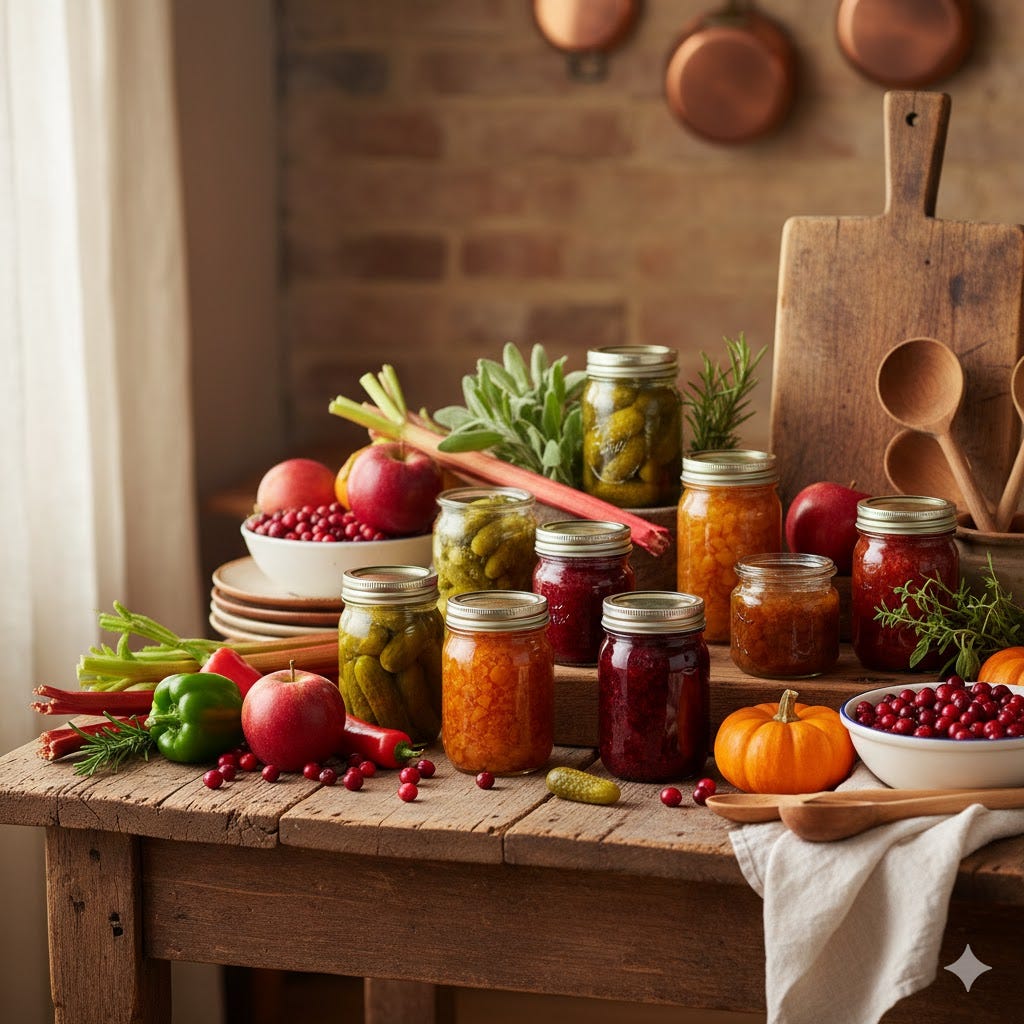
🌿 What’s in Season Month by Month in Northern Wisconsin
Eating with the seasons connects us back to nature, supports local growers, and ensures we’re getting produce at its peak flavor and nutrition.
March
The very first tender greens start to appear
Early foraging finds like morel mushrooms (late March into April)
April
Early spring greens: spinach, kale, chard, lettuce
Rhubarb begins to poke through by month’s end
Herbs like chives and parsley re-emerge
May
Asparagus and rhubarb take the spotlight
Fresh greens, peas, and herbs
Early new potatoes
June
Strawberries, greens, peas, and new potatoes
Kale, Swiss chard, and herbs in abundance
Early carrots and beets ready for harvest
July
Peak summer harvest: raspberries, blueberries, sweet corn, tomatoes, peppers, beans, cucumbers, summer squash
Herbs, greens, and peas continue
August
Late summer bounty: tomatoes, peppers, eggplant, corn, melons, cucumbers, beans, herbs
Blueberries and raspberries still strong
Apples begin to ripen late in the month
September
Fall harvest: apples, pears, grapes, cabbage, carrots, beets, turnips
Winter squash, pumpkins, Brussels sprouts begin
Late summer crops hang on if frost holds off
October
True fall abundance: apples, pears, cranberries, pumpkins, winter squash, parsnips, rutabagas, turnips, cabbage, kale, Brussels sprouts
Storage onions and potatoes
November
Harvest wrap-up: apples and pears (storage), cranberries, winter squash, pumpkins, carrots, beets, cabbage, kale, hardy greens
Perfect for preserving or fermenting
December
Root and storage crops: squash, potatoes, onions, garlic, beets, carrots
Cold-frame greens and herbs if you’ve got a protected space
🐝 A Note from the Homestead
Seasonal eating isn’t just about what’s fresh — it’s about rhythm. Knowing when to expect certain crops helps us plan meals, stock the pantry, and feel grounded through the cycles of the year. Whether you’re canning up a storm in July or roasting root veggies by the wood stove in December, every season brings its own abundance.
For me, the busiest months are July through November. I prefer small-batch canning throughout the season rather than freezing everything until one massive canning session — it keeps the work manageable and enjoyable. In June and July, I harvest berries, pickles, and peas, canning each weekend. By August, tomatoes and peppers are in full swing, turning into salsa and sauces weekly.
September brings fall fruits and vegetables — I harvest grapes for juice (we’re not huge jelly fans), and wait until late September or October for apples, pumpkin, cabbage, and pears, when cooler temps naturally add sweetness. November is perfect for sauerkraut, relishes, and processing wild game from hunting adventures.
As winter settles in, the pace slows, but it doesn’t stop. Cold months are ideal for making snacks like granola bars or chips, planning your garden for the next season, and testing grab-and-go meals for lunches. And, of course, enjoying the fruits of your hard work with some well-deserved relaxation.
I’ll be sharing all of my canning recipes so you can preserve what’s in season and enjoy it year-round. A tip from me: swap with friends in your community. My bestie makes killer dilly beans and salsa, while I rock jams and jellies — swapping jars keeps things exciting and diverse!
Canning, preserving, and growing your own food isn’t just about what’s in the jar — it’s about the rhythm, the memories, and the peace that comes from knowing exactly what’s feeding your family. So grab your jars, swap with a friend, and savor the simple magic of homemade food all year long.
🌿 Stay Connected & Preserve with Me
If you love real, wholesome food, seasonal eating, and the magic of canning and preserving, join our community! By subscribing, you’ll get:
Seasonal tips and guides to help you eat and preserve with the rhythms of nature
Tried-and-true recipes for jams, jellies, sauces, and grab-and-go meals
Inspiration for simple, wholesome living that nourishes your body and soul
Sign up today and never miss a post — let’s make your kitchen a place of abundance, creativity, and wellness.