

Be Part of the Rooted & Rising — Subscribe
Want more blunt-but-loving tips, real food recipes, and down-to-earth wellness inspiration? Join my weekly email where I share new blog posts, behind-the-scenes homesteading tips, and a dose of motivation to help you thrive without the fluff.
We have become a nation of convenience and are allergic to work. Billions of people scroll, sigh, and post about how they can’t afford their bills — then keep doing the same things that got them there. If that stings, good. It should. Stop posting for sympathy and start doing something about it.
If you can’t afford junk food because real whole food is what your family needs, that’s on you — and that’s okay. Sacrifice doesn’t mean doom and gloom. It means learning a skill. There are a million YouTube videos that will literally show you how to make potato chips, tortilla chips, cheese crackers, or even gummy bears. Put your phone down long enough to try one. Your oven, air fryer, or a sheet pan and a little salt are cheaper than a lifetime of processed snack runs.
Ask yourself: do you need a new towel every season? A new bedspread because a brand told you to? New clothes because algorithms pushed a trend? Maybe, maybe not. Thrift stores are full of perfectly good pieces — your style doesn’t come from a label, it comes from you. And everything we toss ends up somewhere. Landfills don’t magically make things disappear; they sit, leak, and poison. That’s not just a wallet problem — it’s a legacy problem.
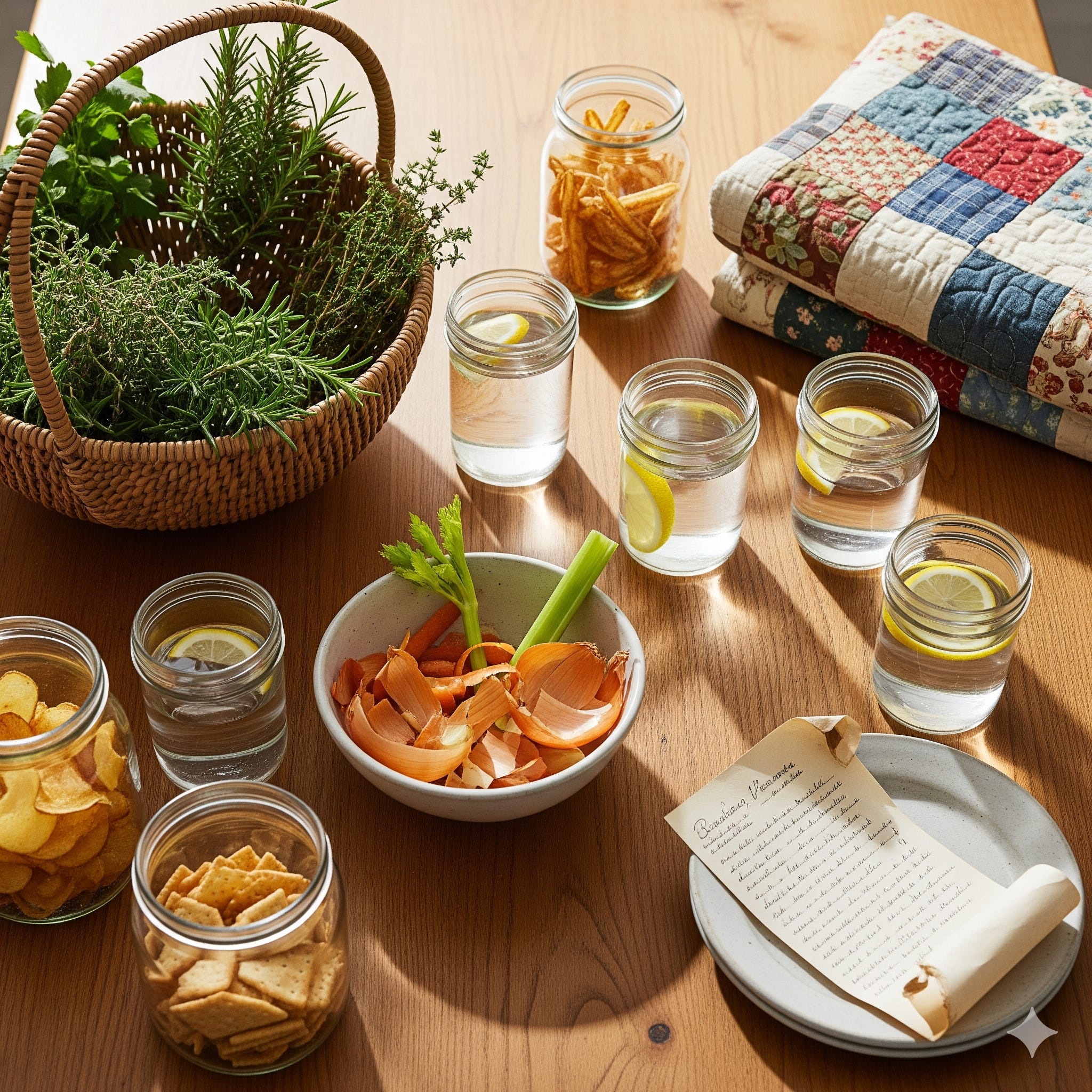
This is the part where homesteading and common sense meet: food scraps aren’t trash. Bread ends become croutons. Vegetable peels and onion skins become broth. Stale buns? Toast them for breadcrumbs. Jars become drinking glasses, pantry storage, or canning vessels. Old towels become rags. Clothes that are worn out become quilts or cleaning cloths. And yes — you can grow basil on a windowsill, green onions in a cup, lettuce in a tub. Every little plant you put in the sun is money you don’t spend at the grocery store and a lesson you pass to a kid who’s watching.
When you stop keeping up with the Joneses and start getting creative with what you have, something else happens besides saving money: you build dignity. You build resilience. You create memories — day trips, date nights, camping with the kids — instead of another impulse buy that will be in the landfill in three years. That’s stewardship. That’s smart. That’s love in action.
When you finally step off the hamster wheel of “keeping up with the Joneses,” you discover something powerful: freedom. Freedom from comparison, freedom from buying things you don’t even want, and freedom from the stress of chasing a lifestyle built on credit cards and clutter. Instead of pouring money into fleeting trends, you start investing in things that matter — skills, experiences, memories, health.
And here’s the part a lot of people miss: your kids (or nieces, nephews, grandkids, neighbor kids) are watching. Every single time you choose to mend, repurpose, cook from scratch, or make do instead of “buy new,” you’re rewriting the script they’ll live by. You’re showing them that contentment beats consumption, resourcefulness beats wastefulness, and grit beats entitlement. They grow up understanding that their worth isn’t tied to a logo, that a little hard work saves a lot of money, and that caring for the earth and their budget is a form of respect.
This shift doesn’t just save dollars; it changes culture. You’re planting seeds of resilience, stewardship, and gratitude in the next generation — the kind of seeds that grow into adults who know how to thrive without trampling the planet or their bank accounts. That’s a legacy you can’t buy at Target, and it’s a whole lot more satisfying than a haul of “new season” décor.
This isn’t just about saving money or decluttering your home. Stewardship is a spiritual discipline. God has placed resources — your home, your income, your health, your time — in your care, not just for you but for the people He’s entrusted to you and for the generations who come after you. Choosing to cook instead of waste, to repurpose instead of toss, and to teach instead of indulge is a way of saying, “Lord, I honor what You’ve given me.”
It’s also one of the simplest ways to model faith for the next generation. When kids see you mending, reusing, planting, or stretching a meal, they’re learning that God’s provision is enough. They’re learning that gratitude and responsibility go hand in hand. They’re learning that living within your means isn’t punishment — it’s freedom. And they’re learning that caring for creation is an act of worship, not an afterthought.
“The earth is the Lord’s, and everything in it, the world, and all who live in it.” — Psalm 24:1
“Each of you should use whatever gift you have received to serve others, as faithful stewards of God’s grace in its various forms.” — 1 Peter 4:10
So yeah, it’s hard work. It’s supposed to be. You were built for more than convenience. Get your hands dirty, put up your jars, and teach your people how to do the same.
Loved This Post? Share the Wisdom
If this hit home for you, don’t keep it to yourself. Share it on Facebook, pin it to Pinterest, text it to a friend, or email it to that person who’s always talking about wanting to live simpler. The more we spread this mindset, the bigger the ripple we make for our families, communities, and the planet.